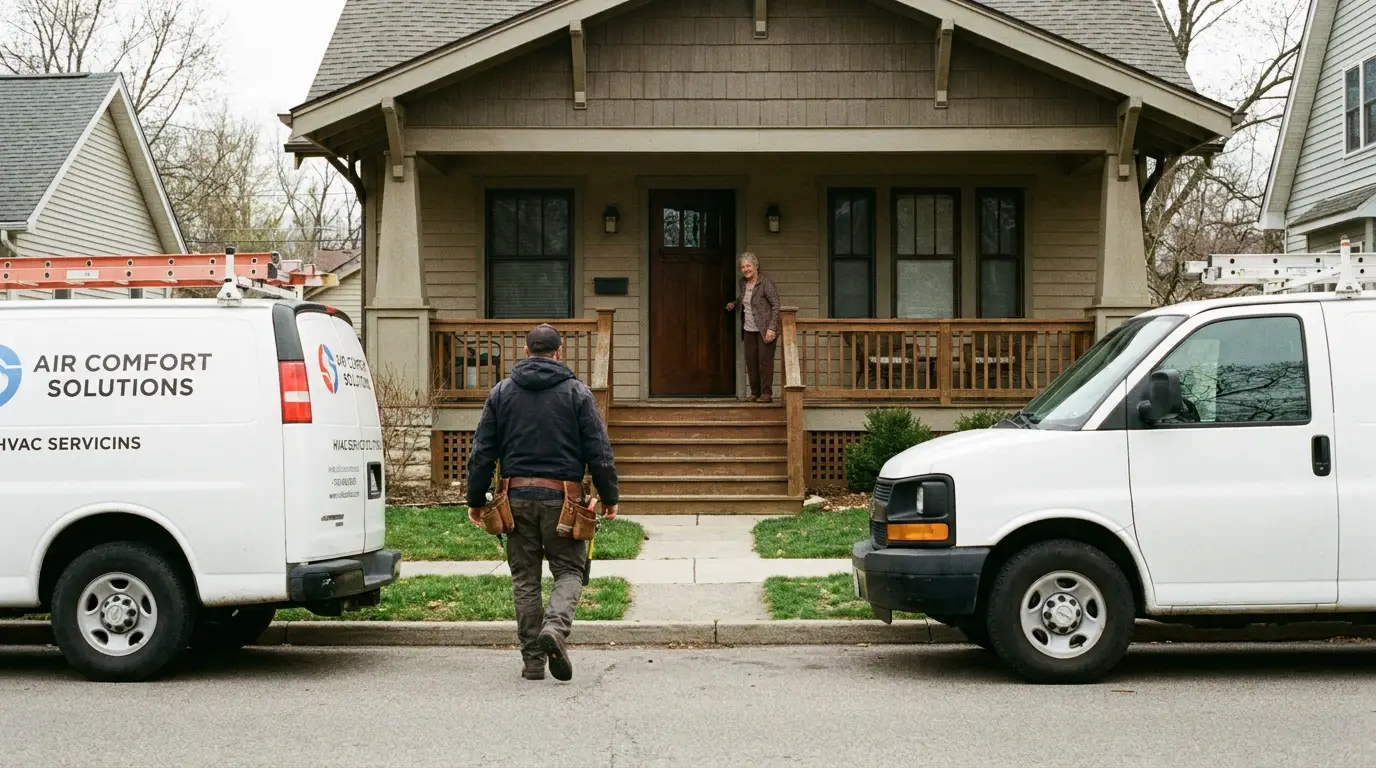
HVAC repair Houston homeowners may need in early fall isn’t always caused by something that happened that week. Sometimes, the problem started months earlier—during the long, demanding Houston summer.
Your AC may have been running day after day to keep your home comfortable through weeks of heat and humidity. A system that seemed to handle everything just fine can start showing signs of wear once the season begins to change.
So, why do HVAC problems appear after a long summer?
Because months of extended operation can expose components, airflow problems, electrical issues, drainage concerns, and other weaknesses that may eventually turn into a noticeable failure.
Your AC Didn’t Get a Summer Vacation
Houston summers can be tough on HVAC systems.
For homeowners, it’s easy to think of an AC running continuously as normal—and in hot weather, longer operating cycles can certainly be expected.
But months of heavy use also mean more:
- Operating hours
- Starts and stops
- Airflow demand
- Condensate production
- Filter loading
- Wear on moving and electrical components
A system that was already developing a small problem may continue operating until that problem becomes impossible to ignore.
That’s why a homeowner may notice an HVAC issue in September or October and think:
“Why is this happening now? It worked all summer.”
Sometimes, the better question is:
“What did the system experience all summer?”
The Late-Summer HVAC Plot Twist
Imagine your AC has been working normally for months.
Then you notice:
The house isn’t cooling quite as quickly.
A few days later:
One room feels warmer than the others.
Then:
The system seems to run longer than usual.
Finally:
The AC stops working.
These don’t necessarily represent four unrelated problems.
They could be stages of the same underlying issue—or completely different problems that happen to become noticeable at the same time.
That’s why guessing at the symptom can be risky.
What Can Months of Summer Use Reveal?
1. Electrical Components Can Show Wear
Your HVAC system depends on electrical components to start, control, and operate the equipment.
After months of operation, a component that was already weakening may eventually fail.
A system that suddenly won’t start, cycles unexpectedly, or has other electrical symptoms should be professionally evaluated rather than repeatedly reset.
2. Airflow Problems Can Become More Noticeable
If airflow has been restricted all summer, your system may have been working harder than it should.
A dirty filter, blocked return, duct restriction, or other airflow issue can affect comfort and system performance.
You may notice:
- Weak airflow from certain vents
- Rooms that remain uncomfortable
- Longer cooling cycles
- Uneven temperatures
The solution isn’t necessarily a new AC.
First, find out whether the system is actually moving air as it should.
3. Condensate Drain Problems Can Catch Up With You
Air conditioning removes moisture from indoor air.
That moisture needs somewhere to go.
If the condensate drain becomes restricted or clogged, water can back up and trigger safety controls or create other problems.
A homeowner may discover the issue because of:
- Water around the indoor unit
- A full drain pan
- A musty smell
- An unexpected system shutdown
If you see water where it shouldn’t be, don’t ignore it.
4. Filters Can Become Overdue
A filter that looked fine earlier in the summer may be much dirtier after months of operation.
As filters collect particles, airflow can become restricted.
That’s why checking your filter shouldn’t be a once-a-year task.
Your home’s conditions, filter type, occupancy, pets, and system usage can all affect how frequently it needs attention.
5. Refrigerant-Related Problems May Become Obvious
If your system is struggling to maintain temperature or isn’t cooling as expected, refrigerant-related problems are one possibility—but they aren’t something homeowners should diagnose based solely on symptoms.
Low refrigerant can indicate a leak or another system issue that requires professional diagnosis.
Adding refrigerant without identifying the underlying cause isn’t a complete repair.
Why a Problem Can Wait Until Fall to Show Up
HVAC failures don’t always happen immediately after a component begins to wear.
A system can continue operating while compensating for a developing problem.
Then conditions change.
The system cycles differently.
Temperatures fluctuate.
The homeowner notices a new noise or comfort problem.
And suddenly, what seemed like a minor issue becomes a service call.
That’s one reason seasonal transitions are useful opportunities to pay attention to HVAC performance.
Don’t Confuse a Repair Problem With a Replacement Problem
A late-summer HVAC issue doesn’t automatically mean it’s time for a new system.
A professional evaluation should consider:
System age
How old is the equipment?
Repair history
Has this been an isolated problem or one of several recent failures?
System condition
Are other components showing significant wear?
Airflow
Is the system delivering and distributing air properly?
Performance
Is the equipment still operating as expected?
Long-term outlook
Would repairing the current issue reasonably extend the useful life of the system?
These factors provide a much better basis for a repair-versus-replacement decision than the latest symptom alone.
HVAC Repair Houston: What Should You Do When Summer Ends?
If your system is showing new symptoms after months of heavy cooling, don’t wait for the first cold front to assume the problem will disappear.
Watch for:
- Unusual noises
- Weak or inconsistent airflow
- Longer-than-usual cooling cycles
- Rooms that are suddenly harder to cool
- Water around the indoor unit
- Unexpected shutdowns
- Higher energy use without a clear explanation
- A system that struggles to maintain the thermostat setting
One symptom doesn’t necessarily tell you what has failed.
It tells you that something deserves a closer look.
A Fall Repair Can Be Better Than a Winter Surprise
Houston homeowners don’t necessarily need their AC to run at peak capacity every day once fall arrives.
That can make the seasonal transition a useful time to address developing problems.
Fixing an issue while the system is still operating can be preferable to discovering a major failure when you need the equipment most.
And if an inspection reveals that your system is approaching the end of its service life, you’ll have more information to make a planned decision rather than reacting to an emergency.
Your AC Made It Through Summer. Now Check How.
A Houston HVAC system can work hard for months without making a dramatic complaint.
Sometimes the warning signs are subtle: a room that feels warmer, airflow that seems weaker, a strange sound, or a system that takes longer to reach the set temperature.
Those signs are worth paying attention to.
At CoolTechies, HVAC service looks beyond the immediate symptom to evaluate equipment condition, airflow, electrical components, ductwork, and overall system performance.
If your AC is acting differently after a long Houston summer, don’t wait for a complete breakdown to find out why.
Schedule an HVAC evaluation and find out whether your system needs a repair, maintenance, or a bigger conversation.
FAQs
Why do HVAC problems appear after a long summer?
Months of heavy HVAC operation can expose wear in electrical and mechanical components, airflow restrictions, drainage problems, dirty filters, and other developing issues. Some problems may remain manageable until they eventually affect system performance.
What are common signs my AC needs repair after summer?
Watch for unusual noises, weak airflow, longer cooling cycles, uneven temperatures, water around the indoor unit, unexpected shutdowns, or difficulty maintaining the thermostat setting.
Does an HVAC problem always mean I need a new system?
No. A repair may be appropriate depending on the system’s age, condition, repair history, and the nature of the problem. A professional evaluation can help determine whether repair or replacement makes more sense.
By Calixto Armas