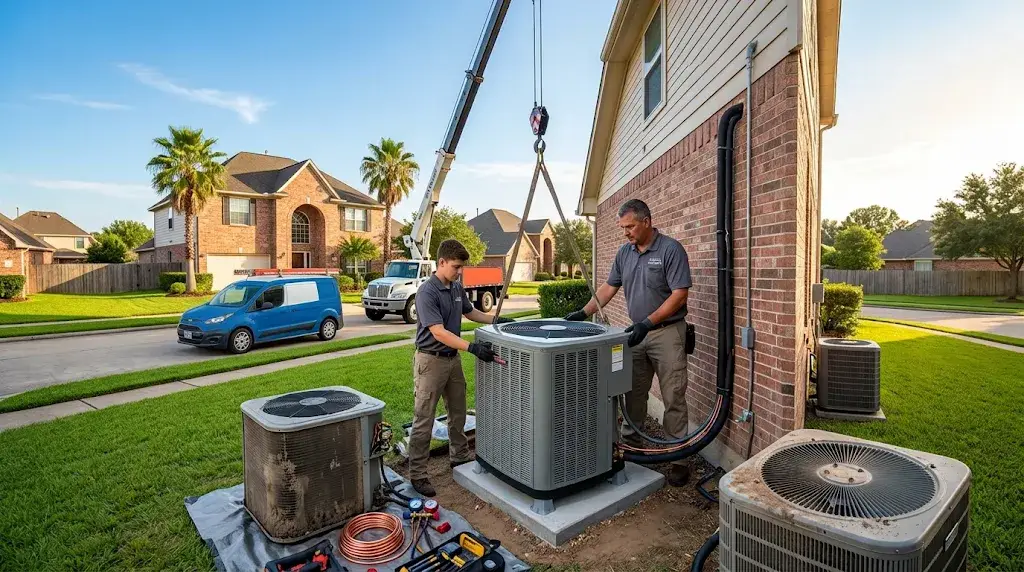
AC replacement Houston homeowners consider is a major decision, especially when an existing air conditioning system can no longer deliver consistent comfort. But replacing an AC unit involves more than removing old equipment and installing a new one. The process should include evaluating the home’s cooling requirements, selecting appropriately sized equipment, checking the existing ductwork, and verifying system performance after installation.
So, what should homeowners expect during an AC replacement? A professional installation typically involves an initial assessment, equipment selection, preparation, removal of the old system, installation of the new unit, and performance testing.
Understanding these steps can help Houston homeowners make informed decisions and know what a complete installation should include.
When Is AC Replacement Houston a Better Option Than Repair?
Not every cooling problem means a homeowner needs a new air conditioner. Some issues can be resolved with a repair, while others may indicate that replacement deserves consideration.
An HVAC professional can evaluate the equipment’s age, condition, repair history, and operating performance before recommending either option.
AC replacement may be worth considering when:
- The system experiences frequent or increasingly expensive repairs.
- Certain rooms remain uncomfortable despite previous service visits.
- The equipment struggles to maintain the desired indoor temperature.
- The system has significant component failures.
- Replacement parts are difficult to obtain.
- The existing unit no longer meets the home’s cooling requirements.
However, age alone should not determine the decision. A properly maintained system may continue operating effectively, while a newer unit can still have installation or performance problems.
The objective is to compare the cost and expected value of continued repairs against the benefits of installing appropriately selected equipment.
Step 1: Evaluating Your Home Before Choosing a New AC Unit
Before recommending equipment, an HVAC contractor should understand the home and its cooling requirements.
This evaluation is especially important in Houston, where high temperatures and humidity can place considerable demands on residential air conditioning systems.
A professional assessment may consider:
Home size and layout: Square footage matters, but the number of rooms, ceiling heights, windows, and layout also influence cooling requirements.
Insulation and air leakage: Poor insulation and uncontrolled air leaks can affect how much cooling a home needs.
Existing ductwork: Duct size, condition, airflow restrictions, and leakage can influence how effectively conditioned air reaches different rooms.
Occupancy and internal heat gains: The number of occupants, appliances, lighting, and other heat sources can affect indoor cooling demand.
Current system performance: The technician should investigate whether the existing equipment has been operating correctly and whether comfort complaints are related to the unit, ductwork, or another part of the system.
A proper load calculation, such as the Manual J methodology, helps determine the home’s heating and cooling requirements. This is more reliable than choosing a replacement based only on the size or capacity of the old unit.
Step 2: Selecting the Right Air Conditioning System
Once the home’s requirements are understood, the next step is selecting suitable equipment.
Homeowners may compare different system capacities, efficiency ratings, features, and configurations. However, the largest or most expensive unit is not automatically the best choice.
An oversized AC system may cool a home too quickly without running long enough to manage indoor humidity effectively. An undersized system may struggle to maintain comfortable temperatures during periods of high outdoor heat.
The equipment should be selected according to the home’s calculated cooling load and the manufacturer’s specifications.
Depending on the project, a contractor may also use Manual S principles to guide equipment selection.
Before approving the installation, homeowners should understand:
- The recommended system capacity.
- The equipment’s efficiency rating.
- Whether the new system is compatible with existing components.
- What modifications may be necessary.
- What is included in the installation proposal.
- The applicable manufacturer and labor warranties.
A clear proposal helps homeowners compare options based on more than the initial equipment price.
Step 3: Preparing the Home and Removing the Old Equipment
Once the installation is scheduled, the contractor should explain how the work will be organized and whether the homeowner needs to prepare anything.
The installation team typically identifies access points, protects the work area, and reviews the existing equipment configuration.
The removal process depends on the type of system and its location. It may involve disconnecting electrical connections, recovering refrigerant using appropriate equipment, removing the indoor and outdoor units, and preparing the areas for the replacement.
Homeowners should not attempt to disconnect or remove AC equipment themselves. Refrigerant handling and electrical work require qualified professionals and appropriate procedures.
If the existing installation has damaged connections, deteriorated components, or other issues, the contractor should explain whether additional work is necessary before proceeding.
Step 4: Installing the New AC System
With the old equipment removed and the installation areas prepared, the team can begin setting up the new system.
The specific work depends on whether the home has a split air conditioning system, packaged equipment, or another configuration.
For a typical split system, installation may involve:
- Positioning the new outdoor condenser.
- Installing or connecting the indoor evaporator coil or air handler components.
- Reviewing refrigerant line connections.
- Connecting the electrical and control wiring.
- Connecting the condensate drainage system.
- Checking the thermostat and system controls.
- Verifying that the installation follows manufacturer requirements and applicable codes.
The existing ductwork should also be evaluated. Installing new equipment without addressing significant duct restrictions, leakage, or airflow problems can limit the performance of the replacement system.
This is an important distinction: a new AC unit cannot automatically correct problems throughout the home’s air distribution system.
Step 5: Testing System Performance After Installation
A replacement project should not end when the equipment is physically installed.
Before considering the job complete, the technician should verify that the system operates according to its specifications.
Depending on the equipment and installation, this may include checking:
Refrigerant-related operating conditions: The system should be evaluated using the appropriate manufacturer procedures and charging method.
Airflow: The technician should assess whether air is moving through the system as intended.
Electrical operation: Relevant electrical connections and operating conditions should be checked.
Condensate drainage: The drainage system should be verified to help prevent water-related problems.
Thermostat communication: The thermostat should correctly control the new equipment and respond to temperature settings.
Overall operation: The system should be run and evaluated to identify abnormal sounds, operating issues, or other concerns.
Homeowners should also receive an explanation of the new system’s operation, thermostat settings, filter requirements, and maintenance recommendations.
A professional installation includes both equipment setup and verification that the system is working as intended.
What Should Houston Homeowners Ask Before Approving an AC Replacement?
Before signing an installation agreement, take time to understand the proposed work.
These questions can help you evaluate the recommendation:
- Was a load calculation performed? Ask how the contractor determined the appropriate equipment capacity.
- Will the existing ductwork be evaluated? Confirm whether airflow restrictions or duct leakage need attention.
- What equipment is included? Review the model, capacity, efficiency rating, and included components.
- Are additional modifications necessary? Ask whether electrical, drainage, refrigerant line, or ductwork changes are part of the project.
- What warranties apply? Understand the manufacturer’s coverage and any labor warranty provided by the contractor.
- Will the system be tested after installation? Confirm that commissioning and performance checks are included.
These questions help establish clear expectations and make it easier to compare installation proposals.
Is Your Houston Home Ready for a New AC System?
Replacing an air conditioner is an opportunity to address more than an aging piece of equipment. It is also a chance to evaluate how the home’s cooling system, ductwork, thermostat, and airflow work together.
For Houston homeowners, proper equipment selection and installation matter because the system must handle extended periods of heat and humidity while maintaining comfortable indoor conditions.
Cool Techies helps homeowners in Houston, Katy, and surrounding areas evaluate their HVAC needs and explore replacement options.
Call 832-400-5730 to discuss your AC replacement project and find out what your home needs before installing a new system.
Frequently Asked Questions
How long does an AC replacement take?
Many residential AC replacements can be completed within one working day, but the actual timeline depends on the equipment, accessibility, ductwork condition, and whether additional modifications are required. More complex projects may take longer.
Should ductwork be replaced when installing a new AC unit?
Not necessarily. Existing ducts may remain suitable if they are properly sized, sealed, and in good condition. However, significant leakage, damage, or airflow restrictions should be evaluated because they can affect the performance of the new system.
How do I know what size AC unit my Houston home needs?
The appropriate equipment size should be determined through a professional load calculation that considers factors such as home dimensions, insulation, windows, orientation, and other cooling requirements. Choosing a unit based only on square footage or the old system’s capacity may lead to poor performance.
Marielys Ceballos