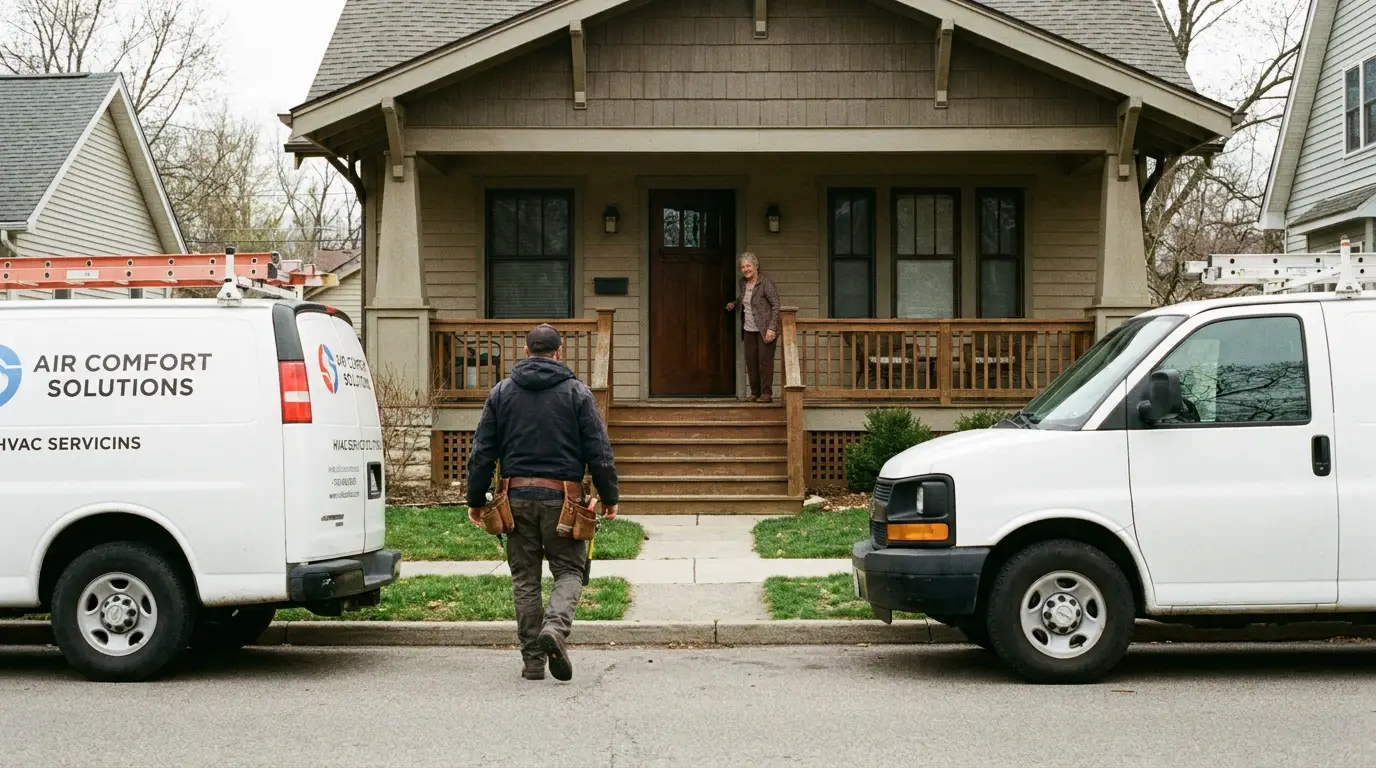
Airflow testing Houston homeowners can rely on starts with a simple question: why does one room feel completely different from another?
The thermostat says 72°F.
The living room feels comfortable.
But the bedroom at the end of the hallway? Somehow, it feels like a different climate.
If you’ve ever walked into one room of your Houston home and immediately noticed that it’s much hotter—or colder—than the rest of the house, you’re not imagining it.
So, why are some rooms hotter or colder than others?
The answer isn’t always a problem with your air conditioner. In many cases, the issue is related to airflow, ductwork, insulation, system sizing, or air distribution.
That’s where airflow testing in Houston can help uncover what’s actually happening.
The Houston House Temperature Test
Houston homes have their own unique relationship with air conditioning.
For much of the year, your HVAC system isn’t just taking the edge off the heat. It’s working hard to keep indoor temperatures comfortable while Houston’s outdoor conditions can be hot and humid.
And if you’ve ever driven through areas such as Katy or Five Ranch, you’ve probably noticed how different homes can be in size, layout, age, and design.
A larger home, a long duct run, a room located over a garage, or a bedroom at the far end of the system can all create different comfort conditions.
That’s why simply turning the thermostat down isn’t always the answer.
When One Room Becomes the “Hot Room”
Imagine this:
It’s a hot Houston afternoon.
The thermostat is set to 74°F.
The downstairs feels fine.
Then you walk upstairs and notice the temperature is noticeably higher.
You lower the thermostat.
The AC runs longer.
The downstairs gets colder.
But the upstairs still isn’t comfortable.
At this point, the question shouldn’t necessarily be:
“Do I need a bigger AC?”
It should be:
“Where is the conditioned air going—and how much is actually reaching that room?”
That’s a very different question.
Your HVAC System Is a Distribution Network
Think of your HVAC system as more than just the indoor and outdoor equipment.
Conditioned air has to travel through a network of ducts and eventually reach individual rooms through supply registers. Return air then needs to make its way back to the system.
If something interferes with that process, comfort can suffer.
For example:
Long duct runs can create additional resistance.
Leaky ducts can allow conditioned air to escape before it reaches the room.
Restricted ducts can limit the amount of air delivered.
Poorly balanced airflow can send too much air to some areas and too little to others.
Blocked or restricted registers can reduce delivery.
Return-air problems can also affect how effectively the system circulates air.
The result?
One room feels comfortable while another feels like it missed the memo.
Why Five Ranch and Similar Areas Can Tell an Interesting Story
In newer or larger Houston-area communities, homeowners may have homes with multiple floors, larger square footage, high ceilings, expansive windows, or rooms positioned farther from the central HVAC equipment.
That doesn’t automatically mean the HVAC system was installed incorrectly.
But it does mean that air distribution matters.
A system can have enough cooling capacity on paper and still have rooms that don’t receive the airflow they need.
This is one reason that simply replacing an AC system isn’t always the first step.
If the underlying airflow problem remains, a new system may not magically make the uncomfortable room comfortable.
Here’s Where Airflow Testing Houston Changes the Conversation
Instead of guessing, airflow testing looks at what the system is actually doing.
Depending on the system and the situation, a professional evaluation can look at factors such as:
- Airflow at supply registers
- Return airflow
- Static pressure
- Duct restrictions
- Possible duct leakage
- Temperature differences
- Air distribution between areas of the home
- Overall system performance
The goal is to move from:
“This room is always hot.”
to:
“Here’s why this room is receiving less conditioned air.”
That distinction matters.
The Thermostat Isn’t the Whole Story
Your thermostat measures conditions at its location.
It doesn’t necessarily know that the bedroom across the house is warmer.
It doesn’t know that a nursery gets too cold while the home office stays warm.
And it can’t tell you whether a duct is restricted or leaking.
So if the thermostat says 74°F but one room feels significantly different, changing the thermostat setting may only mask the symptom.
A diagnostic approach looks at the system as a whole.
Could It Be Insulation Instead?
Absolutely.
Airflow isn’t the only possible explanation.
A room can also become harder to cool because of:
- Inadequate insulation
- Air leaks
- Large or poorly shaded windows
- Direct sun exposure
- Attic heat
- Room location
- Changes to the home’s layout
This is why good HVAC troubleshooting shouldn’t jump straight to one explanation.
If airflow is normal but a room continues to gain heat unusually quickly, the next question may involve the building envelope rather than the HVAC equipment.
Why Bigger Isn’t Always Better
When a room is uncomfortable, some homeowners naturally assume they need a larger air conditioner.
But installing larger equipment isn’t a guaranteed solution.
An HVAC system needs to be appropriately matched to the home and its conditions. Oversized equipment can create its own performance and comfort issues, including shorter cycles and inadequate dehumidification.
The better question is:
Is the existing system properly sized, distributing air correctly, and operating as intended?
That requires evaluation—not guesswork.
A Quick Homeowner Investigation
Before calling for service, take a few notes.
Room #1: The Comfortable One
Which room feels right?
Room #2: The Problem Room
Which room is consistently too hot or cold?
Time of Day
Does the problem happen all day or mainly in the afternoon?
Season
Is it primarily a summer problem, a winter problem, or both?
Airflow
Does the register seem to have noticeably weaker airflow than other rooms?
Location
Is the room upstairs, over a garage, at the end of a hallway, or far from the HVAC equipment?
These observations can give your HVAC professional useful clues.
But they don’t replace actual testing.
What Airflow Testing Can Tell You
The purpose of airflow testing in Houston isn’t simply to confirm that air is coming out of a vent.
It’s about understanding whether the HVAC system is moving and distributing the appropriate amount of air throughout the home.
If the measurements point toward duct restrictions, static pressure problems, poor distribution, or another issue, the next step can be based on evidence rather than trial and error.
That could mean addressing ductwork.
It could mean correcting airflow restrictions.
It could involve evaluating insulation or other parts of the home.
Or, in some cases, it could reveal that the HVAC equipment itself needs attention.
Don’t Turn the Thermostat Into a Tug-of-War
If one room is always too hot and another is always too cold, your thermostat shouldn’t have to settle the argument.
The solution may not be setting the temperature lower.
It may not be replacing the AC.
And it may not be buying another portable fan.
First, find out what’s happening with the air.
For Houston homeowners and property managers, airflow testing can provide the information needed to understand uneven comfort and identify the underlying problem.
CoolTechies evaluates HVAC performance with attention to airflow, static pressure, ductwork, and system operation—because comfortable rooms shouldn’t depend on where you happen to be standing.
If one room in your Houston property never seems to match the rest, let’s find out why.
FAQs
Why are some rooms hotter or colder than others?
Uneven temperatures can result from airflow restrictions, duct leakage, poor air distribution, insulation problems, room location, solar heat gain, or HVAC sizing issues. An airflow evaluation can help determine which factors are contributing to the problem.
What is airflow testing for an HVAC system?
Airflow testing evaluates how effectively an HVAC system moves and distributes conditioned air through the home. Depending on the system, testing can include measurements related to supply and return airflow, static pressure, and other performance factors.
Can airflow problems make an AC work harder?
Yes. Restrictions, duct issues, and poor air distribution can affect system performance and comfort. Identifying the source of the problem can help determine whether the issue is related to airflow, ductwork, equipment, or another part of the home.
By Marielys Ceballos