
Professional Air Duct Cleaning
(Evidence-Based, Controlled Process)
If you’re noticing excess dust, musty odors, worsening allergies, or you’ve recently completed a remodel, a full-system cleaning can help restore indoor air quality (IAQ) and airflow. Our approach isn’t “just vacuum the ducts”—we focus on the critical system components that drive real performance.
What air duct cleaning is—and when it’s recommended
Air duct cleaning is a comprehensive cleaning of a forced-air heating and cooling system, including supply and return ducts, registers amf diffusers, and key components like coils, drain pan, and the blower motor.
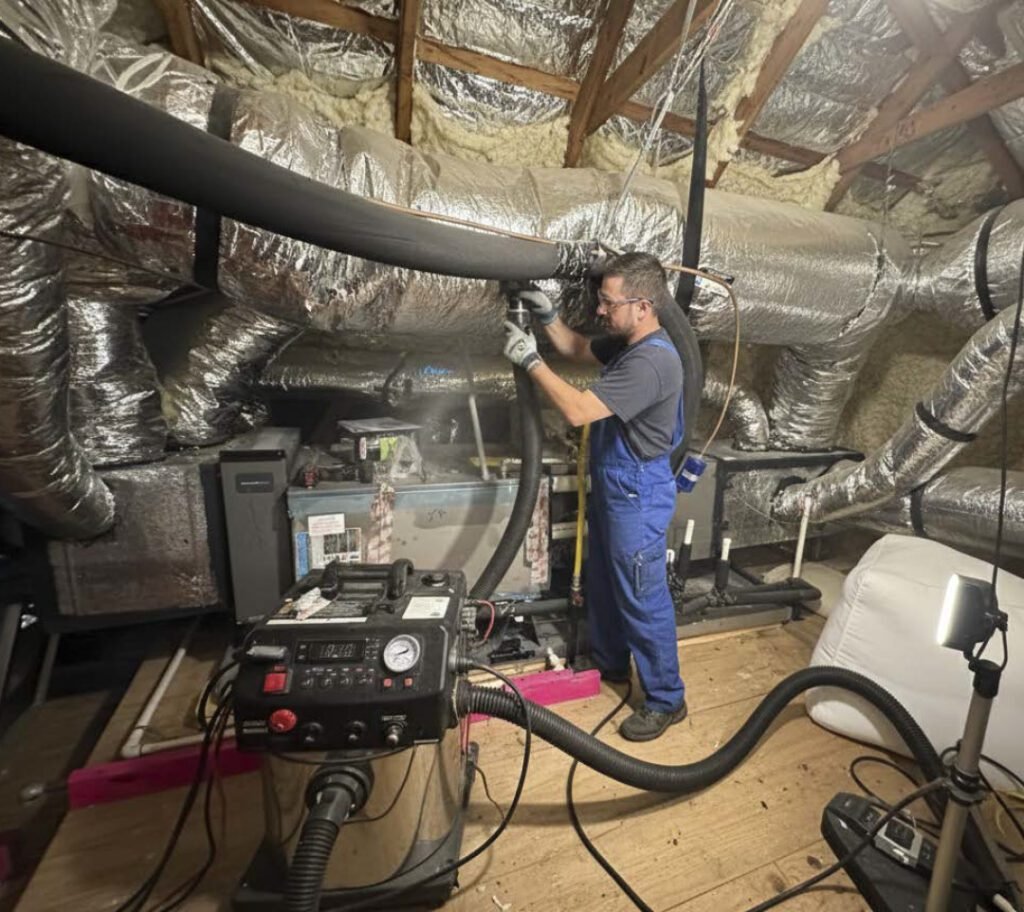
A professional method uses continuous negative pressure (high-powered vacuum) combined with agitation tools to dislodge debris and extract it from the home—without spreading dust into your living spaces.
Recommended frequency:
NADCA suggests cleaning every 3 to 5 years. However, frequency depends on the environment; homes with pets, smokers, or residents with asthma/allergies may benefit from service every 2–3 years.
It’s especially recommended if:
– There is visible mold (or a strong suspicion)
– There’s evidence of pest infestation (rodents/insects)
– There’s excessive dust/debris restricting airflow
– You’ve had construction/renovation work (jobsite dust)
What we typically find (and why it matters)

Dust & particles
Household dust, pollen, pet dander, fibers, and construction residue.

Real debris buildup
A typical service can remove 5–6 lb (2–3 kg) of dirt and debris from the system.

Biological reservoirs
With moisture present, ducts and components can harbor mold spores and bacteria.
Indoor air quality
Air recirculates through a home multiple times per day; removing contaminants may help reduce irritants.

System efficiency
Dirt restricts airflow and can reduce effiency by up to -15%. In heavily soiled system, cleaning key components may reduce blower energy use by 41%–60% (per studies).
The key point
The biggest gains don’t come from ducts alone—cleaning the cooling coil and blower is critical. A dirt layer as thin as 0.01 in on a coil can reduce heat transfer by up to ~21%.
Our process (what we inspect and clean)
Initial Inspection & Visual Assessment We begin by evaluating all access points, registers, and returns for signs of moisture or significant debris. To guarantee your peace of mind, we perform a comprehensive diagnostic checklist tailored to your specific concerns. Once we’ve identified the best solutions for your home, we’ll coordinate with our specialized cleaning crew to schedule your service
Home protection We seal registers, protect work areas, and control dust.
Continuous negative pressure We connect high-powered vacuum equipment so debris is captured in the collection system—not released in to the home.
Controlled agitation & extraction We use brushing/air tools to dislodge debris and extract it from the duct system.
Critical components (when applicable) We inspect/clean coils, drain pan, blower/motor, and other high-impact areas where buildup commonly occurs.
Close-out & verification We reassemble, perform a final check, and share maintenance guidance (filters, moisture control, drains).
Important note on mold
If mold is present, there is always a moisture root cause (leaks, condensation, or clogged drains). If that isn’t corrected, the problem will return.
Ready to improve your air and your system’s performance?
FAQs (place where preferred)
How often should I clean my air ducts?
The standard recommendation is every 3–5 years. If you have pets, smokers in the home, or residents with asthma/allergies, consider every 2–3 years.
Will duct cleaning really lower my electric bill?
It can help. Dirt restricts airflow and impacts heat transfer; in some cases efficiency can drop by ~15%. The biggest gains typically come from cleaning coils and the blower, in addition to ducts.
How do I know if there’s mold in my ducts?
You may notice a musty smell or dark spotting near vents, but confirmation requires testing. Most importantly: mold indicates a moisture issue that must be corrected.
Will the cleaning make a mess in my house?
It shouldn’t. A professional service uses negative pressure, register sealing, and protection so dust goes into the collection equipment—not into your rooms
How long does the service take?
For an average home, a full service typically takes 90 minutes to 3 hours, depending on access and contamination level.
Contact Home Comfort Experts Today!
Fill Out the Form